Chimney Flashing Repair: Signs, Fixes and Cost
Chimney flashing repair fixes the metal seal where the roof meets the chimney. That joint takes the runoff from the whole slope above it, moves with every change in temperature and ages faster than the shingles around it. When it fails, water runs down the masonry and shows up as a stain on a ceiling or a fireplace wall. The fix ranges from fresh sealant to a full reflash, and the metal you choose decides how long the repair holds.
Chimney flashing repair means resealing or replacing the metal that bridges the roof and the chimney. Fresh sealant only buys time. Corroded, cracked or loose metal needs a reflash with new step and counter flashing. Material decides lifespan and price. Copper and lead outlast aluminum but cost more to buy and install.
Signs of Leaking Chimney Flashing
Leaking chimney flashing shows itself first inside the house. Look for brown stains on the ceiling next to the chimney, damp patches on the chimney breast in the attic and peeling paint on the wall around the fireplace. A stain that grows after rain and stays dry in dry weather points to the roof joint, not to condensation.
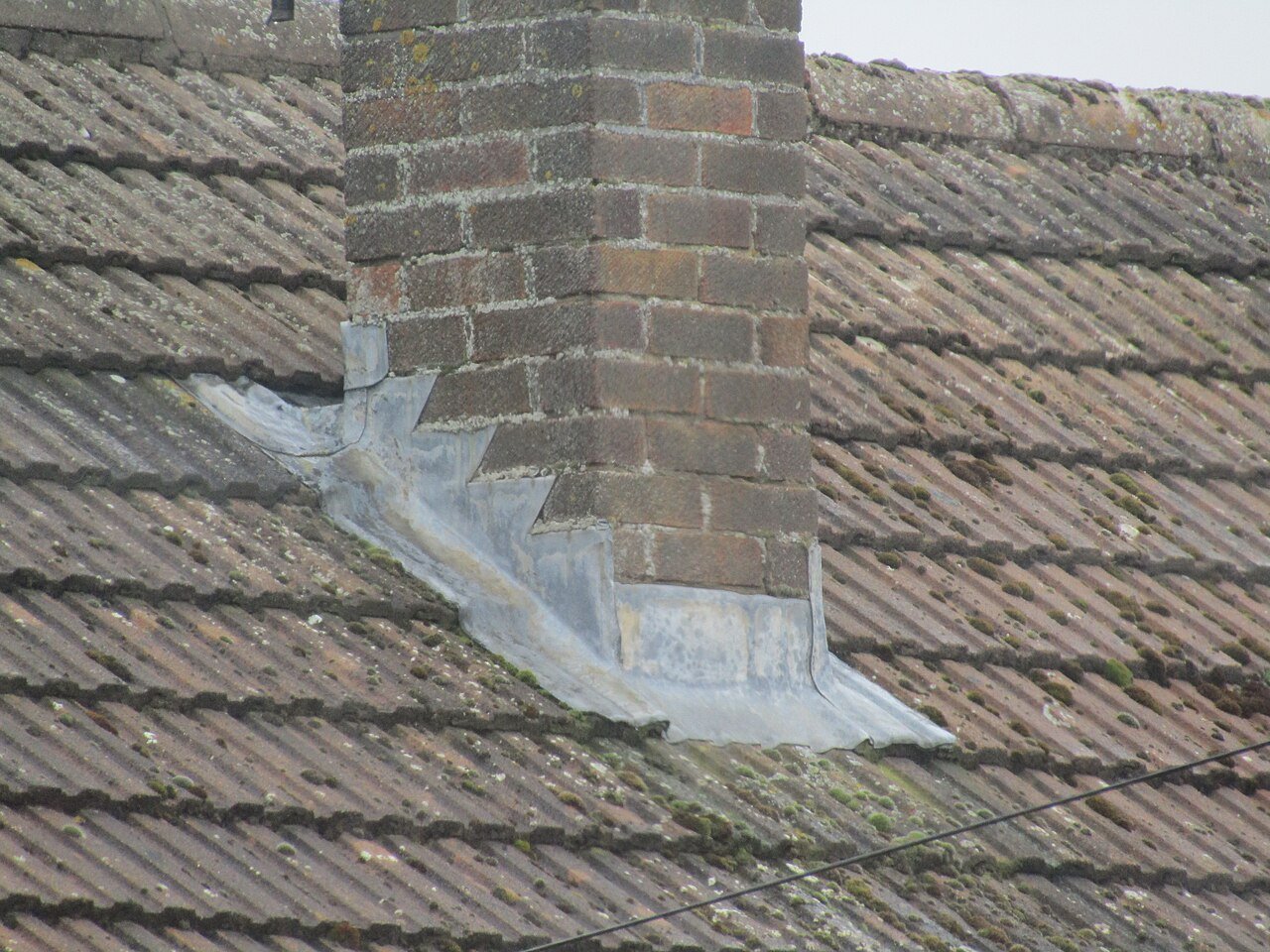
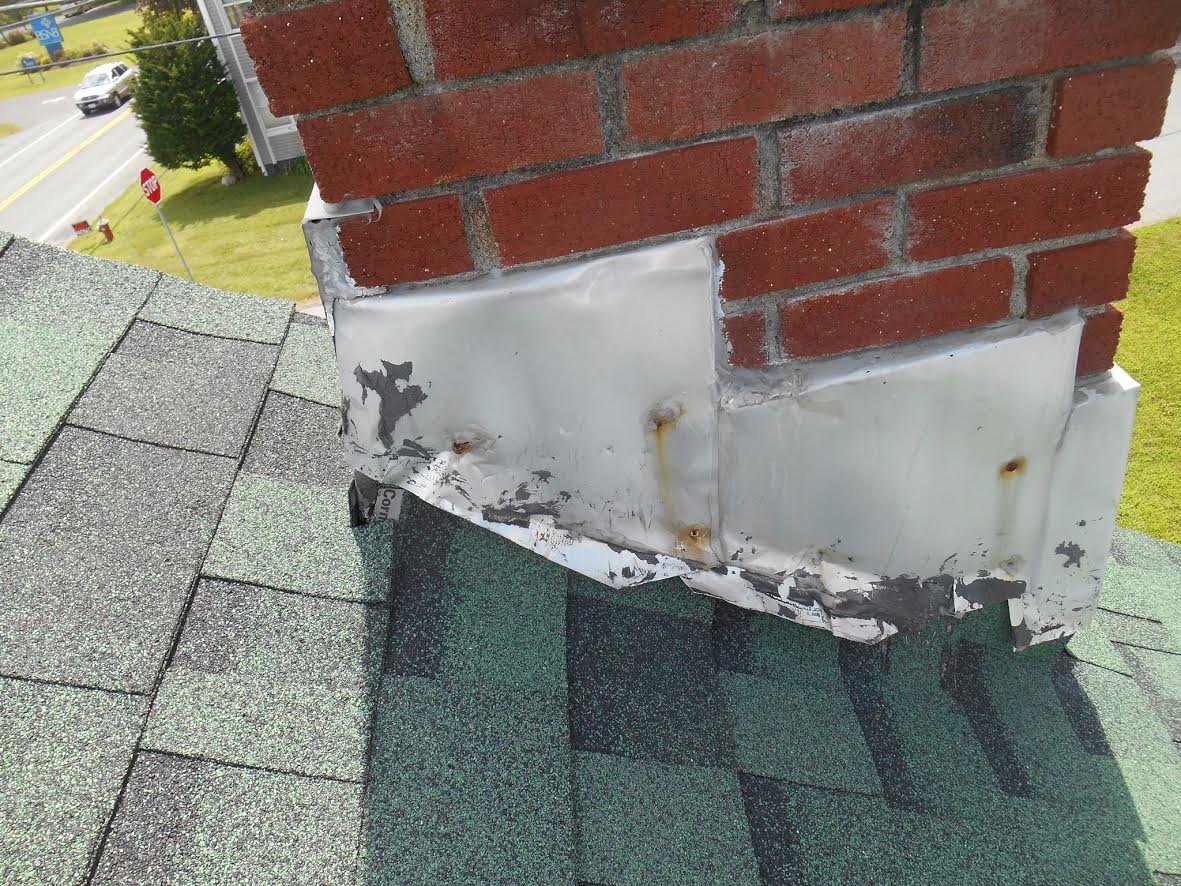
Outside, check the metal from the ground with binoculars. Warning signs are rust streaks, cracks along the bends, edges that lift away from the brick and sealant that has shrunk, split or pulled loose from the mortar joint. A gap where the counter flashing leaves the masonry lets water straight behind the metal.
Rule out the look-alikes before you blame the flashing. A missing or broken chimney cap lets rain fall down the flue. Cracked bricks and crumbling mortar soak up water above the roofline. Both leave the same ceiling stain as a failed flashing joint.
What Chimney Flashing Is and Which Types Exist Chimney flashing is a set of metal pieces that turn water away from the joint between roof and masonry. Each piece has its own job, and a leak often traces back to one of them. For a closely related question, see our guide to roof repair cost.
| Type | Where it goes | Job | Failure sign |
|---|---|---|---|
| Step flashing | Both sides, woven under each shingle course | Sheds water down the slope piece by piece | Lifted pieces, rust at the bends |
| Counter flashing | Cut into a mortar joint above the step flashing | Covers the top edge of the step flashing | Pulled out of the joint, cracked sealant |
| Continuous (apron) flashing | Downslope face of the chimney | Carries water over the shingles below | Rust or an open seam along the front |
| Cricket | Upslope side of wide chimneys | Splits runoff around the chimney | Trapped debris, rust in the small valleys |
Step and counter flashing work as a pair. The counter piece folds down over the step pieces, so roof and chimney can move apart without opening a gap. Continuous flashing appears only on the low side, where one long piece can run straight across. For a closely related question, see our guide to how to fix leak in roof.
How to Fix Damaged Chimney Flashing
Small defects get sealant, everything else gets new metal. A short crack in old caulk or a counter flashing edge that has lifted from its joint can be cleaned, pressed back and sealed with a roofing sealant rated for metal and masonry. Treat that as a bridge, not a repair. Sealant dries out and cracks long before the metal wears through.
Reflash when the metal itself has failed. Rust holes, split bends, step flashing nailed through its face or soft decking beside the chimney all mean tearing out the old pieces, replacing damaged wood and installing new step, counter and apron flashing. A reflash also makes sense during a roof replacement, because the shingles around the chimney come off anyway.
Roof work is fall work. Stay off wet, icy or steep roofs, and leave anything above one story to a crew with fall protection.
Solid Roof Craft tip. Photograph your chimney flashing from the same spot on the ground once a year. Side by side, the photos reveal lifting edges and fresh rust long before a ceiling stain does.
Chimney Flashing Repair Cost
Chimney flashing repair cost depends first on whether you need a reseal or a full reflash. A reseal is a short visit with little material. A reflash means cutting masonry joints, bending new metal, lifting and relaying shingles and sometimes replacing decking, so it typically costs much more.
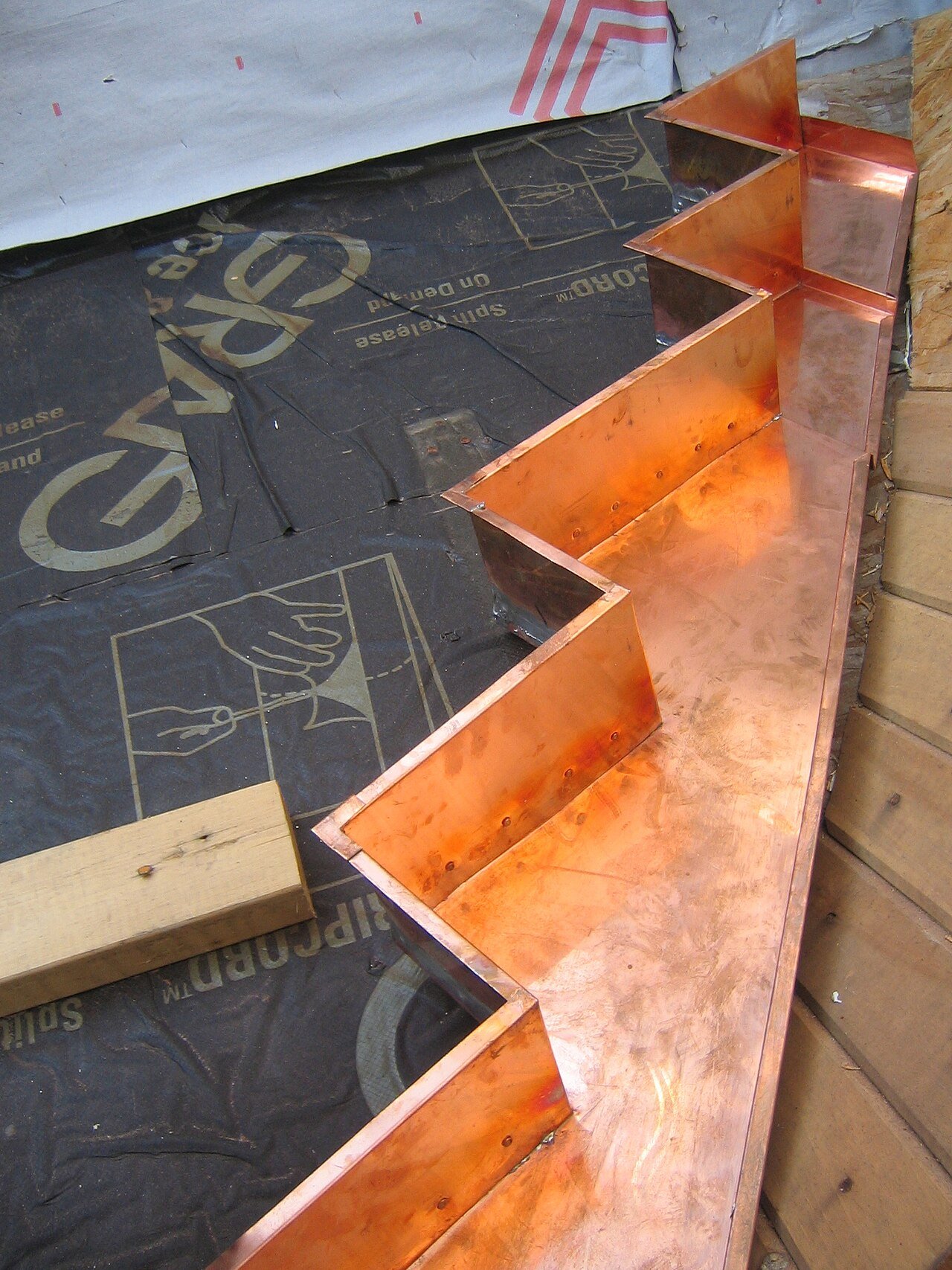
Material is the next lever. Aluminum and galvanized steel are the common choice on US homes and the cheapest to buy. Copper costs more, lasts longer and needs a roofer who can solder. Lead is standard in the UK but rare in the US, so fewer crews work with it, and that shows in the quote. Chimney width, roof pitch, height and the condition of the brick push the price further.
Before you sign, get a written proposal that describes the work, the specifications, the start and completion dates and the payment procedures, as the National Roofing Contractors Association advises. Ask for copies of the contractor’s liability insurance and workers’ compensation certificates as well.
Homeowners insurance can cover sudden damage, such as a falling limb or a storm tearing the flashing loose. Rusted, worn or badly installed flashing counts as maintenance, and policies typically exclude it. Photograph the damage and the interior stains with dates, and keep the roofer’s written findings for the claim.
Related reading: Water Stain on Ceiling.
Related reading: Roof Flashing Repair.
Related reading: Roof Leak Repair Cost.
Frequently Asked Questions
Can a handyman repair chimney flashing?
Yes, for small sealant work such as resealing a counter flashing joint. A reflash means cutting into mortar, weaving step flashing into the shingles and sometimes repairing the deck, and that belongs to a roofer. Licensing rules for roofing work differ by state, so check yours before you hire.
How much does it cost to repair chimney lead flashing?
Lead flashing repair costs more than the same job in aluminum, because the metal is pricier and fewer US roofers work with it. Small splits can be patched, but worn lead gets replaced as a full set. Ask for two written quotes that name the metal and its weight.
Sources
- National Roofing Contractors Association, Selecting a Contractor
- National Roofing Contractors Association, Roofing Materials
One Comment
Comments are closed.